Claude is powerful, but real work requires procedural knowledge and organizational context. Introducing Agent Skills, a new way to build specialized agents using files and folders.As model capabilities improve, we can now build general-purpose agents that interact with full-fledged computing environments. Claude Code, for example, can accomplish complex tasks across domains using local code execution and filesystems. But as these agents become more powerful, we need more composable, scalable, and portable ways to equip them with domain-specific expertise.
This led us to create Agent Skills: organized folders of instructions, scripts, and resources that agents can discover and load dynamically to perform better at specific tasks. Skills extend Claude’s capabilities by packaging your expertise into composable resources for Claude, transforming general-purpose agents into specialized agents that fit your needs.
Building a skill for an agent is like putting together an onboarding guide for a new hire. Instead of building fragmented, custom-designed agents for each use case, anyone can now specialize their agents with composable capabilities by capturing and sharing their procedural knowledge. In this article, we explain what Skills are, show how they work, and share best practices for building your own.
The anatomy of a skill
To see Skills in action, let’s walk through a real example: one of the skills that powers Claude’s recently launched document editing abilities. Claude already knows a lot about understanding PDFs, but is limited in its ability to manipulate them directly (e.g. to fill out a form). This PDF skill lets us give Claude these new abilities.
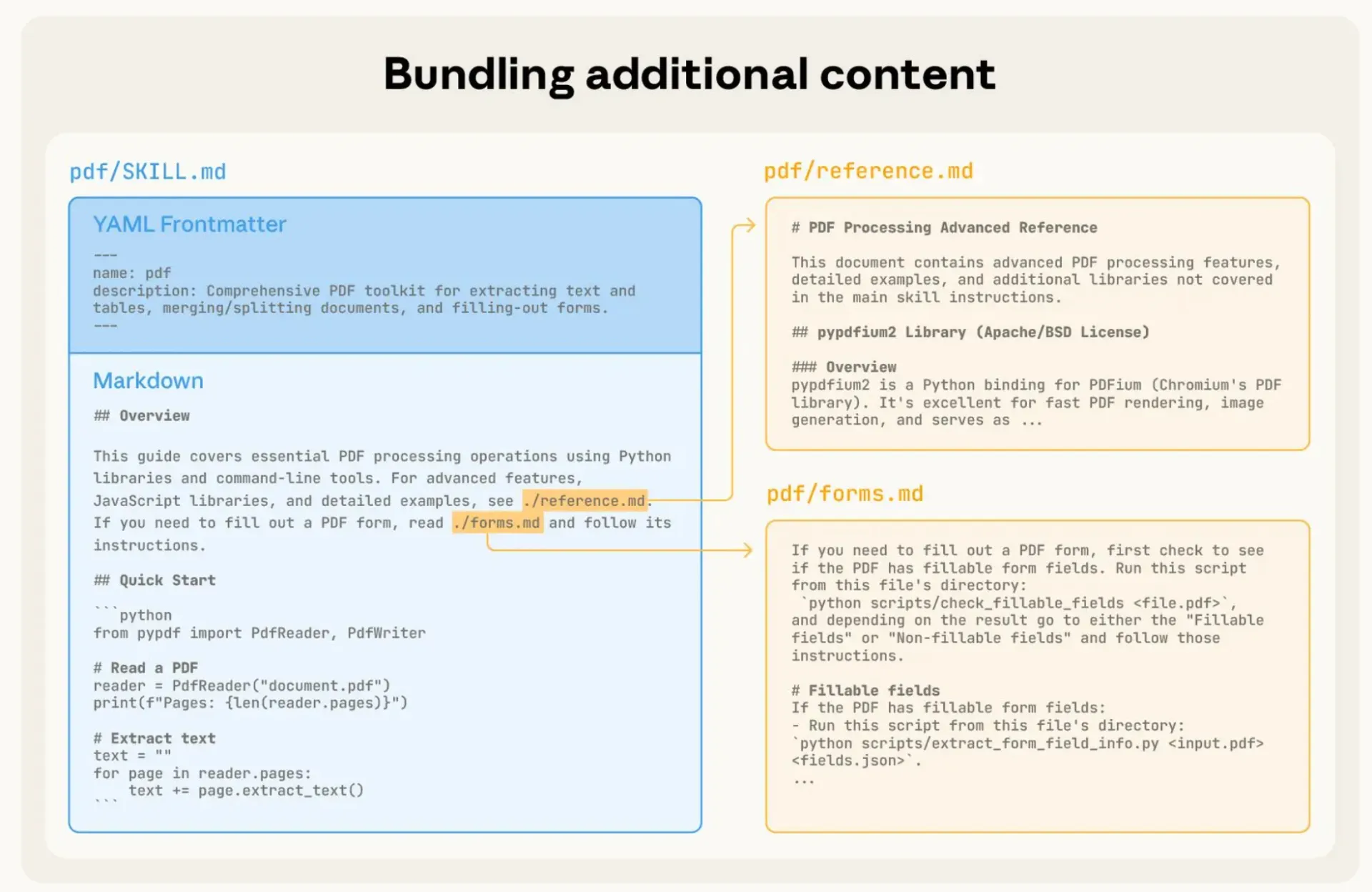
At its simplest, a skill is a directory that contains a SKILL.md file. This file must start with YAML frontmatter that contains some required metadata: name and description. At startup, the agent pre-loads the name and description of every installed skill into its system prompt.
This metadata is the first level of progressive disclosure: it provides just enough information for Claude to know when each skill should be used without loading all of it into context. The actual body of this file is the second level of detail. If Claude thinks the skill is relevant to the current task, it will load the skill by reading its full SKILL.md into context.
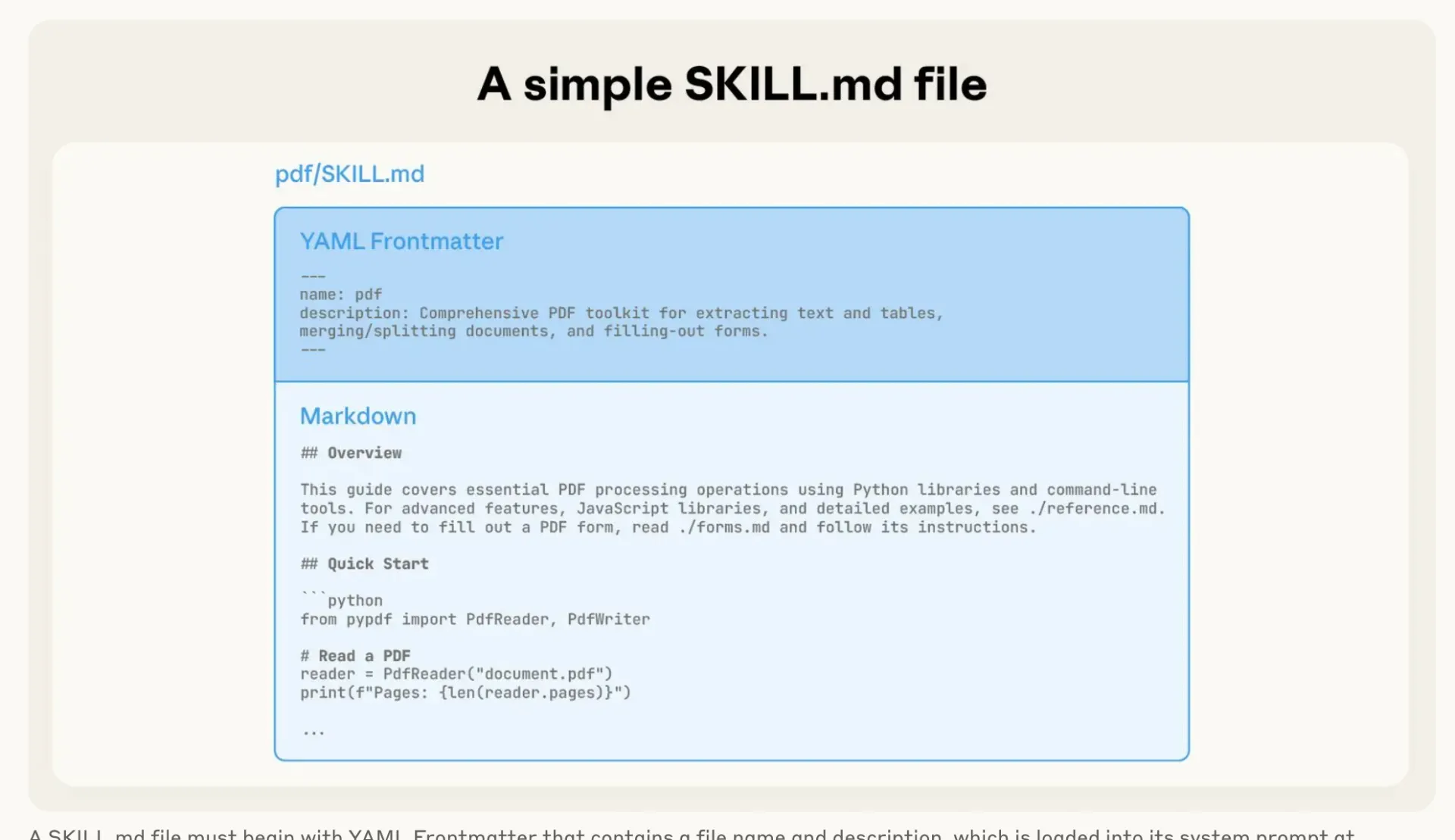
As skills grow in complexity, they may contain too much context to fit into a single SKILL.md, or context that’s relevant only in specific scenarios. In these cases, skills can bundle additional files within the skill directory and reference them by name from SKILL.md. These additional linked files are the third level (and beyond) of detail, which Claude can choose to navigate and discover only as needed.
In the PDF skill shown below, the SKILL.md refers to two additional files (reference.md and forms.md) that the skill author chooses to bundle alongside the core SKILL.md. By moving the form-filling instructions to a separate file (forms.md), the skill author is able to keep the core of the skill lean, trusting that Claude will read forms.md only when filling out a form.
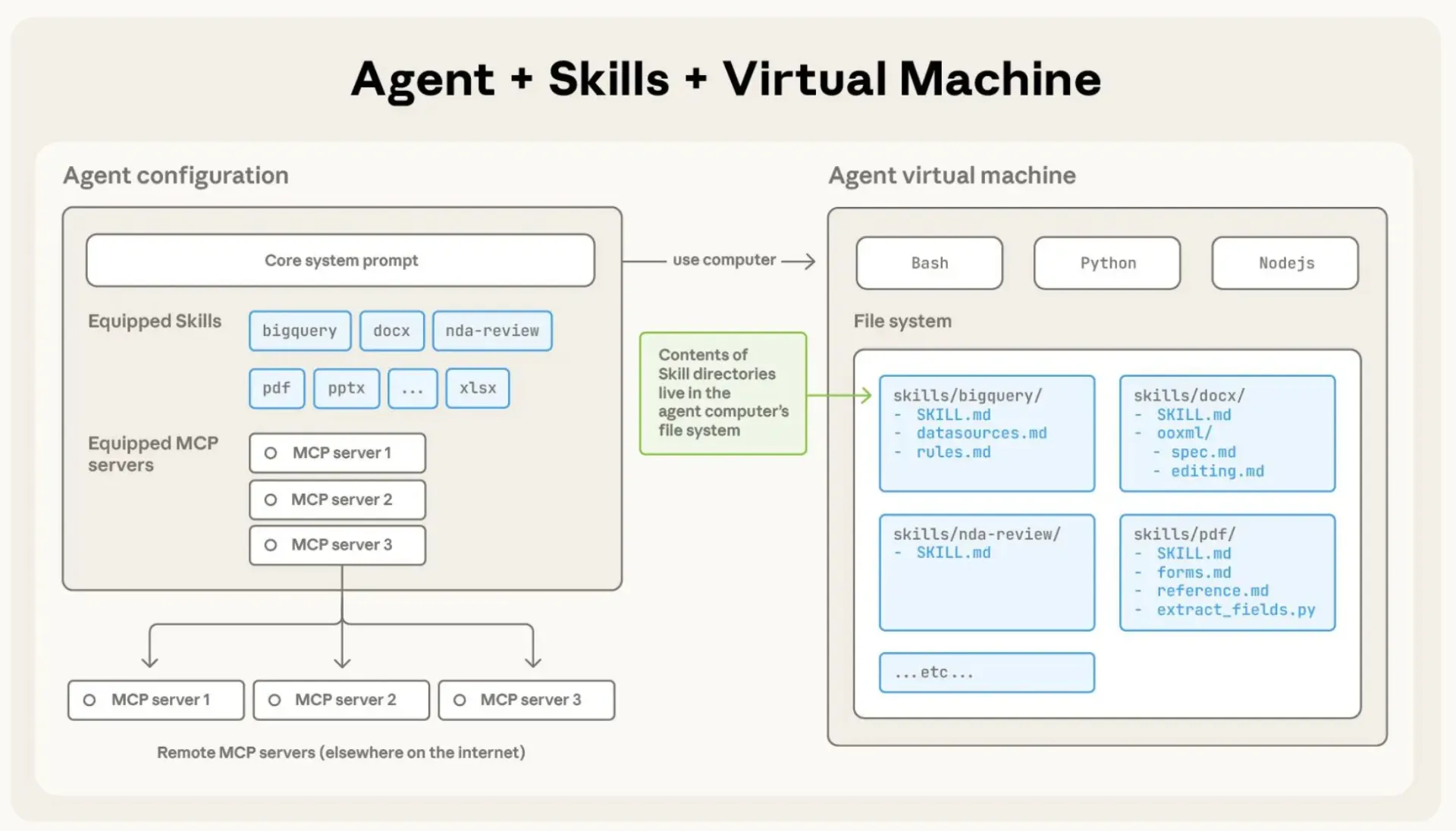
Progressive disclosure is the core design principle that makes Agent Skills flexible and scalable. Like a well-organized manual that starts with a table of contents, then specific chapters, and finally a detailed appendix, skills let Claude load information only as needed:Agents with a filesystem and code execution tools don’t need to read the entirety of a skill into their context window when working on a particular task. This means that the amount of context that can be bundled into a skill is effectively unbounded.